
Seeing and photographing
Where to see Mount Fuji
Where to see Mount Fuji: Lake Kawaguchi, Chureito Pagoda, Fujiyoshida, the Yoshida Trail and Hakone. What I saw from each viewpoint in summer, and where it hid.
On this page
Where to see Mount Fuji: from the north at the lakes, Chureito Pagoda and the streets of Fujiyoshida, from the east in Hakone, and from above on the climb. In August I saw it clear one evening from the south shore of Lake Kawaguchi, then early the next morning from the road. From the other viewpoints on this page it was hazy or hidden.
At a glance
- Clearest view
- sunsetryokan rooftop, south shore of Lake Kawaguchi
- Chureito Pagoda
- hazyaround 7 a.m., when I was there
- Hakone
- never seenthree visits in summer
- Season covered
- Augustno snow, no readings at dawn
Map of the Mount Fuji viewpoints
Loading map…
- Wakakusa no Yado Maruei ryokanI stayed here one night. Mount Fuji viewing deck on the roof.
- Mount Tenjo summitThe lake to the north, Mount Fuji to the south.
- Fujisan Yohaijo toriiPhotos limited to 3 minutes per group.
- Oishi ParkNorth shore. Kochia, lavender, Mount Fuji across the lake.
- Chureito Pagoda and deckThe view of the pagoda and Mount Fuji is from the deck above it.
- Kanadorii gateBig bronze torii lined up with Mount Fuji.
- Honcho Street
- Fuji Subaru Line 5th Station2 305 mShuttle terminus, shops and the Yoshida Trail gate.
- Crater rim3 721 mWhere the Yoshida Trail comes out, with huts and a shrine.
- Hakone Shrine and Torii of PeaceA line for the photo at the torii.
- Owakudani1 044 mSteam vents and black eggs, by ropeway.
Lake Kawaguchi, on the north side
Lake Kawaguchi lies north of Mount Fuji. From the north shore the mountain rises right above the water, but from the south shore it’s behind you, so you have to get up high to see it.
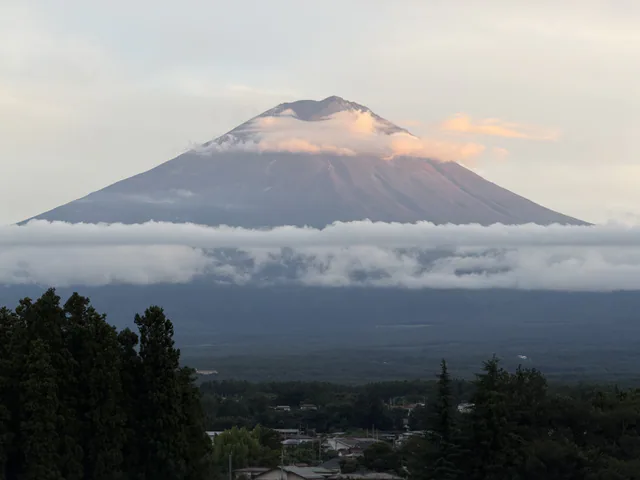
From the roof of my ryokan on the south shore, Mount Fuji was hidden around 5 p.m. I went back up around 6:20 p.m. and the summit had cleared above a sea of clouds.
The other viewpoints around the lake didn’t work out as well. At the top of Mount Tenjo, which the ropeway reaches for ¥1,000 round trip, it was already hazy around 9 a.m. Half an hour later it was hidden behind the torii of Fujisan Yōhaijo, where a sign limits photos to 3 minutes per group.
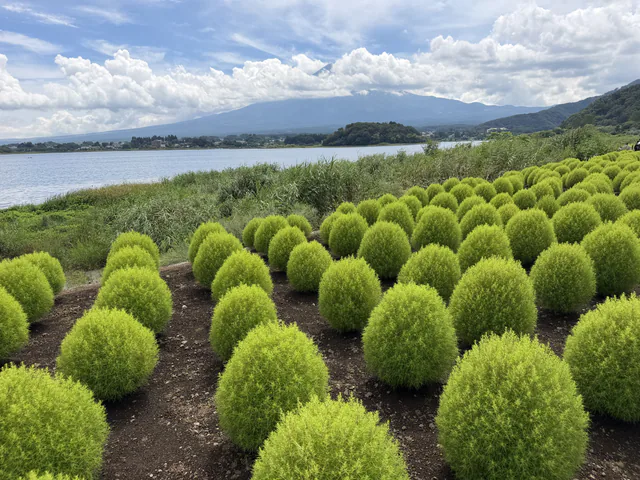
Another day around noon, from Oishi Park on the north shore, all I could make out was its outline under the clouds.
What you give up: Mount Fuji itself, which is often in the clouds in summer. The north shore viewpoints also need a car or the sightseeing bus.
 Read nextLake Kawaguchi (Kawaguchiko)Lake Kawaguchi and the town of Kawaguchiko: the Mount Tenjo ropeway, the north shore, Oishi Park, a lakeside ryokan, places to eat and how to get there by train or bus.
 Read nextOishi Park, Lake KawaguchiOishi Park on the north shore of Lake Kawaguchi: kochia, lavender, the bloom calendar, the view of Mount Fuji, bus access and parking.
Fujiyoshida: the pagoda and Honcho Street
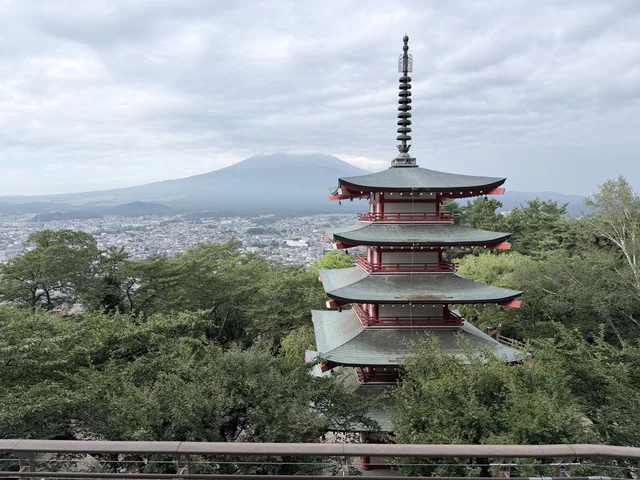
The best-known view of Mount Fuji is the one from Chureito Pagoda, with the town of Fujiyoshida in between. You take it from the observation deck above the pagoda, at the top of a 398-step stairway.
Around 7 a.m. the mountain was visible but hazy, with no snow, and the summit kept slipping into the clouds. There were only about ten people on the deck.
Down in town, Kanadorii, the big bronze torii, frames Mount Fuji at the end of the street, and early in the morning it was hazy there too. By around 1 p.m., though, it had vanished from the end of Honcho Street, the one you see in photos framed by power lines.
What you give up: snow and cherry blossoms in summer, and quiet the rest of the year. The city expects heavy crowds at the pagoda during the cherry blossom season, from late March to early May, and the autumn leaves, from late October to early December.
 Read nextVisiting Chureito PagodaChureito Pagoda in Arakurayama Sengen Park, Fujiyoshida: the 398 steps, paid parking, the train to Shimoyoshida, crowds and the Mount Fuji view.
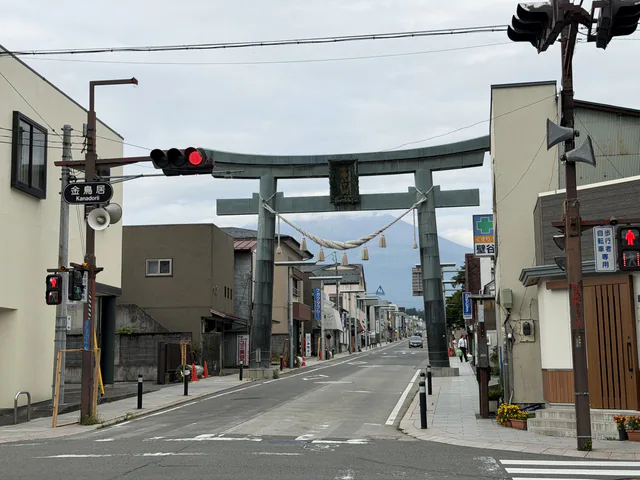 Read nextFujiyoshida and Honcho StreetFujiyoshida at the foot of Mount Fuji: the big bronze torii, Honcho Street and the Gekkoji arcade, Chureito Pagoda, a hotel, a yakitori spot and how to get there.
On the way up: close up, then from above
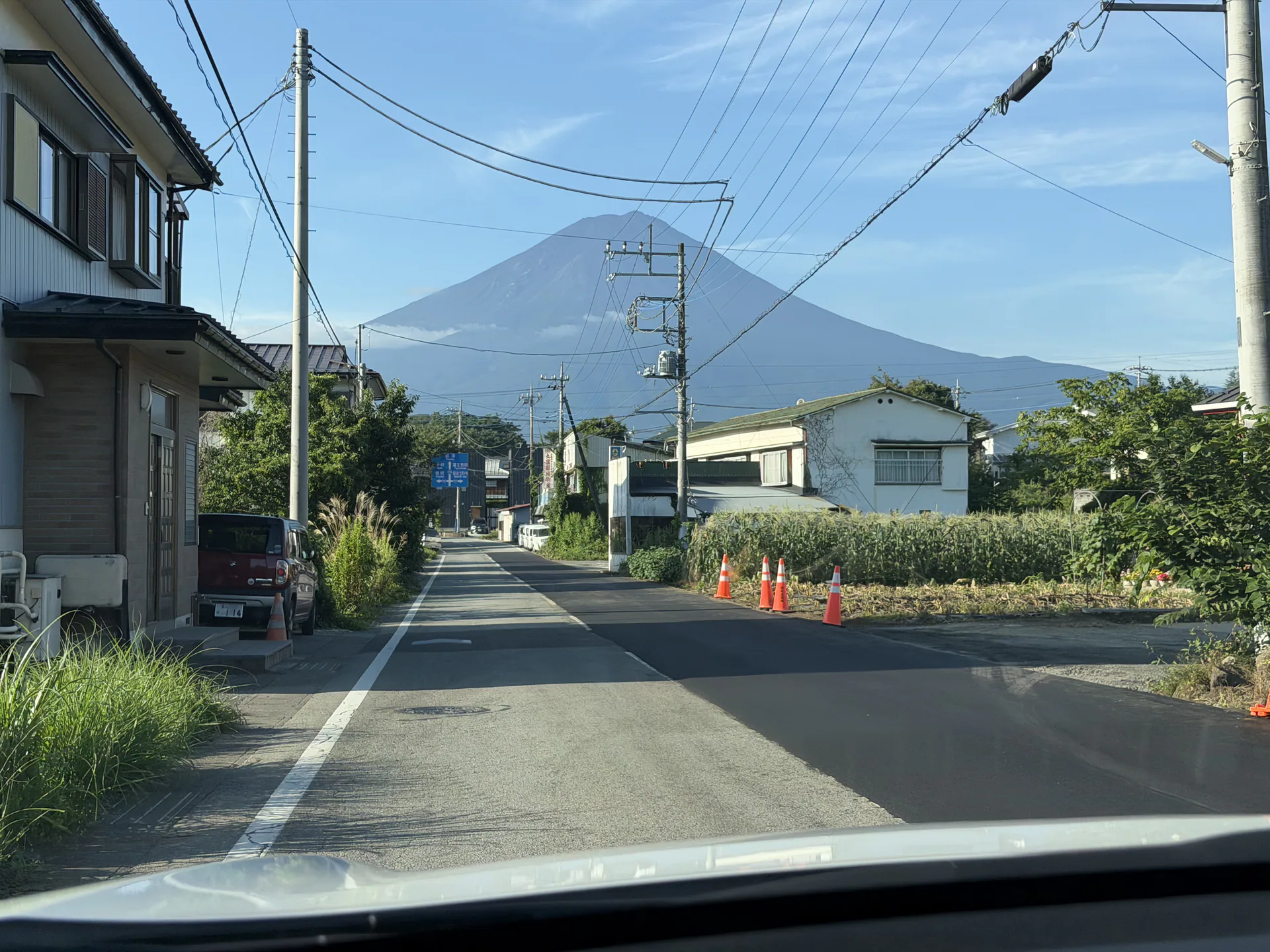
On the day of the climb, Mount Fuji was clear early in the morning from the road to Fujisan Parking, and still clear when I got to the 5th Station around 8 a.m. The clouds came up during the first hour on the trail.
Around 3,150 m you come out above the clouds. From the crater rim you can’t see the cone anymore, just a sea of clouds and the ridge of the crater.
What you give up: the shape of the mountain, which you lose once you’re on it. You can also only climb in summer: the Yoshida Trail was open July 1 to September 10 (2026 season).
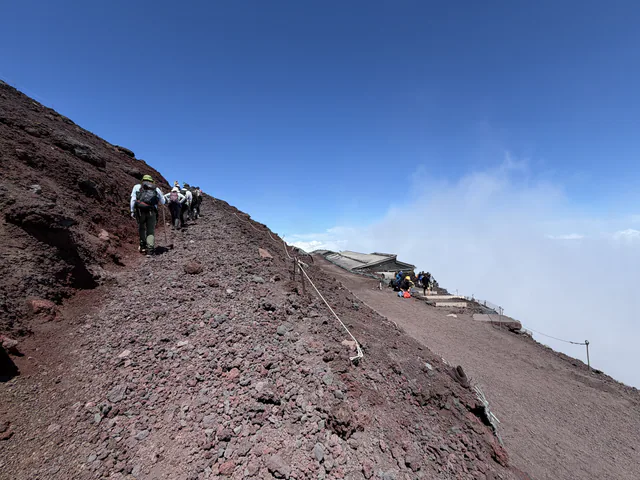 Read nextClimbing Mount FujiClimbing Mount Fuji: the four trails compared, the climbing season, the permit and the different rules in Yamanashi and Shizuoka, 5th Station access and mountain huts.
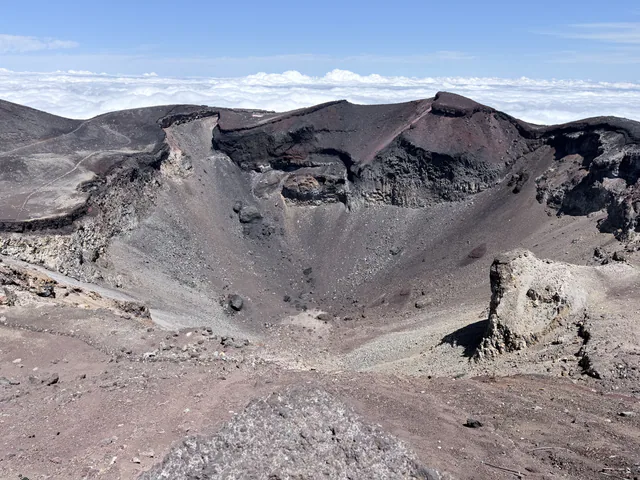 Read nextThe summit of Mount FujiMount Fuji's summit: its exact height, Kengamine, the clockwise crater walk stop by stop, the summit post office and the dangers up top.
Hakone, east of the mountain
Hakone lies east of Mount Fuji. On a clear day you can see the mountain from Lake Ashi and from Owakudani, the volcanic valley the ropeway goes up to.
In my three visits in summer it never showed, though, not even under the clear blue sky at Lake Ashi around noon. In the morning the clouds covered the top of Owakudani.
What you give up: Mount Fuji itself, in summer. Go to Hakone for Hakone, not for Mount Fuji.
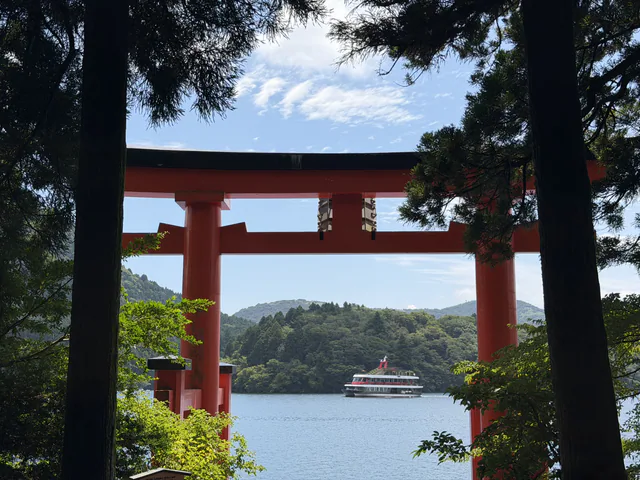 Read nextWhat to see in HakoneHakone area by area: Gora, Owakudani, Lake Ashi, Tōnosawa and the museums. Train, cable car, ropeway and boat fares, a one-day plan, and where to stay in a ryokan.
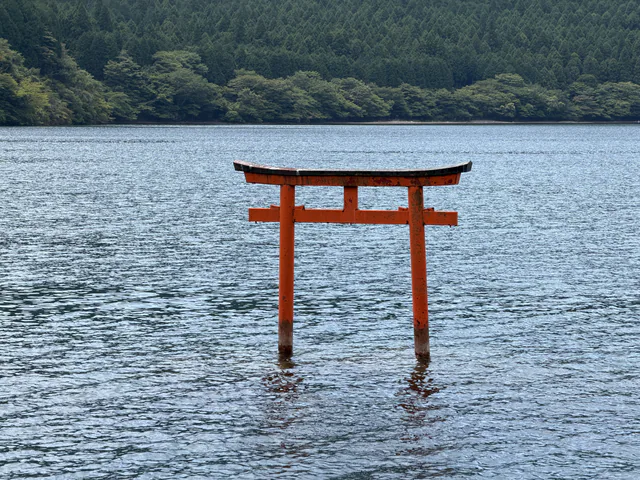 Read nextLake Ashi and its torii gatesLake Ashi in Hakone: the Hakone Shrine torii and its line, the hidden Kuzuryu torii, the pirate ships, Moto-Hakone and where to eat by the lake.
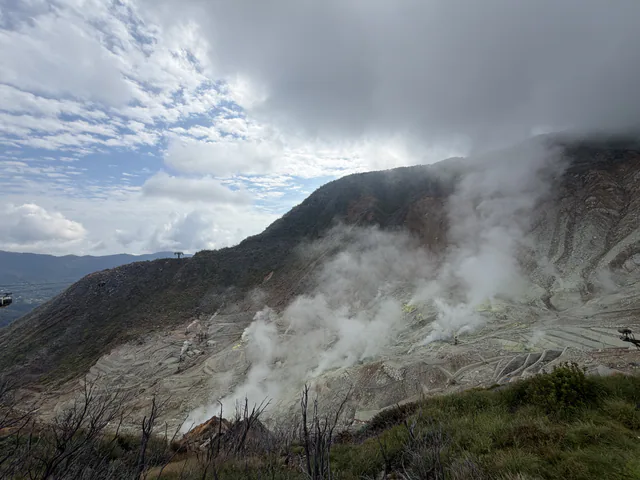 Read nextOwakudani, Hakone's steaming valleyOwakudani in Hakone: the ropeway from Sōunzan, the steam vents and the black eggs, with fares, opening hours and the parking lot.
Viewpoints I didn’t visit
The other four Fuji lakes, Yamanaka, Sai, Shōji and Motosu, are part of the World Heritage site listed in 2013, along with Lake Kawaguchi. So is the Miho no Matsubara pine grove on the Shizuoka coast. Each of these places is described on the Yamanashi Prefecture’s Mount Fuji World Heritage Center site, which presents every component of the listing.
On the Shizuoka side, Gotemba and the Nihondaira plateau are also well-known Mount Fuji viewpoints. I didn’t go to any of these places, so I won’t say more about them.
What a summer shows: mornings and evenings
In August Mount Fuji was often hazy or in the clouds. I saw it clear twice: one evening from my ryokan’s roof, where it came out of the clouds in under two hours, then early the next morning on the road to the climb.
When the ground warms up, the air rises, cools and forms clouds that often reach above the summit by early afternoon, then clear after sunset. A Japan Weather Association forecaster explains this on tenki.jp, the Japanese weather site, in an article on Mount Fuji’s clouds (in Japanese).
The records kept by the city of Fuji, on the Shizuoka side, point the same way. In 2025 the city saw the whole mountain on 136 mornings at 8 a.m., compared with 96 times at noon, and on 19 mornings in December, compared with 3 in August: August is the month it shows the least. In summer, aim for early morning or late in the day.
What I found
I looked for Mount Fuji for six days in August, from Lake Kawaguchi to Hakone.
From the viewpoints on this page I saw it clear twice: one evening from my ryokan’s roof, then early the next morning on the road to the climb. Everywhere else it was hazy, hidden or not there at all.
I have no readings at dawn, and none outside August. In August the mountain was gray, with no snow.
Mistakes to avoid
- Planning a midday viewpoint in summer. Clouds rise with the heat and often cover the summit from early afternoon. Between 9 a.m. and 5 p.m. Mount Fuji was hazy or hidden every time I checked.
- Giving up when it’s hidden in the late afternoon. The clouds clear as the heat drops: around 5 p.m. it was invisible from my ryokan’s roof, then clear around 6:20 p.m.
- Going to Honcho Street in the afternoon. Around 1 p.m. Mount Fuji had disappeared from the end of the street.
- Counting on the Yōhaijo for a quiet photo. Photos are limited to 3 minutes per group.
FAQ
Where is the best place to see Mount Fuji?
From the lakes to the north, especially Lake Kawaguchi, from Chureito Pagoda and Fujiyoshida, from Hakone on a clear day, and from above on the climb. In August I saw it clear from the south shore of Lake Kawaguchi and on the road to the 5th Station.
Can you see Mount Fuji in August?
Less than at any other time of year: in 2025 the city of Fuji saw the whole mountain on only 3 mornings in August, compared with 19 in December. The heat pushes clouds up during the day. Over six days, I saw it clear one evening and the next morning.
Can you see Mount Fuji from Hakone?
On a clear day, from Lake Ashi and Owakudani. In my three visits in summer, it never showed.
Where do you take the Chureito Pagoda photo with Mount Fuji?
From the observation deck above the pagoda, at the top of the 398-step stairway. Early in the morning when I was there, Mount Fuji was visible but hazy.
Does Mount Fuji have snow in summer?
Not when I was there in August: the mountain was gray, with no snow.