
Activities
What to see in Hakone
Hakone area by area: Gora, Owakudani, Lake Ashi, Tōnosawa and the museums. Train, cable car, ropeway and boat fares, a one-day plan, and where to stay in a ryokan.
On this page
- Map of the area, from Tōnosawa to Lake Ashi
- How is the area laid out?
- Getting around: train, cable car, ropeway and pirate ship
- Gora, the practical base
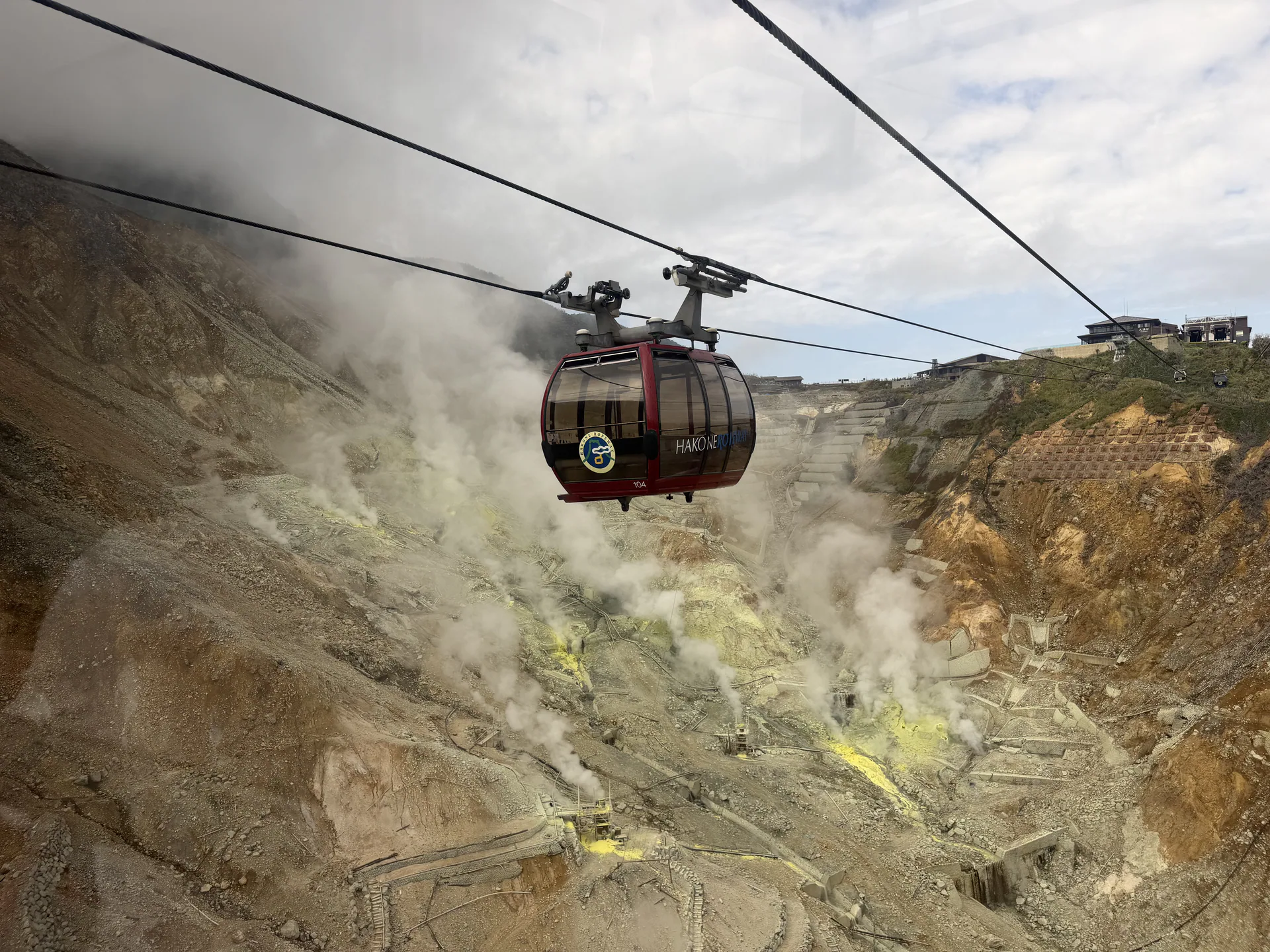
- Owakudani, the steaming valley
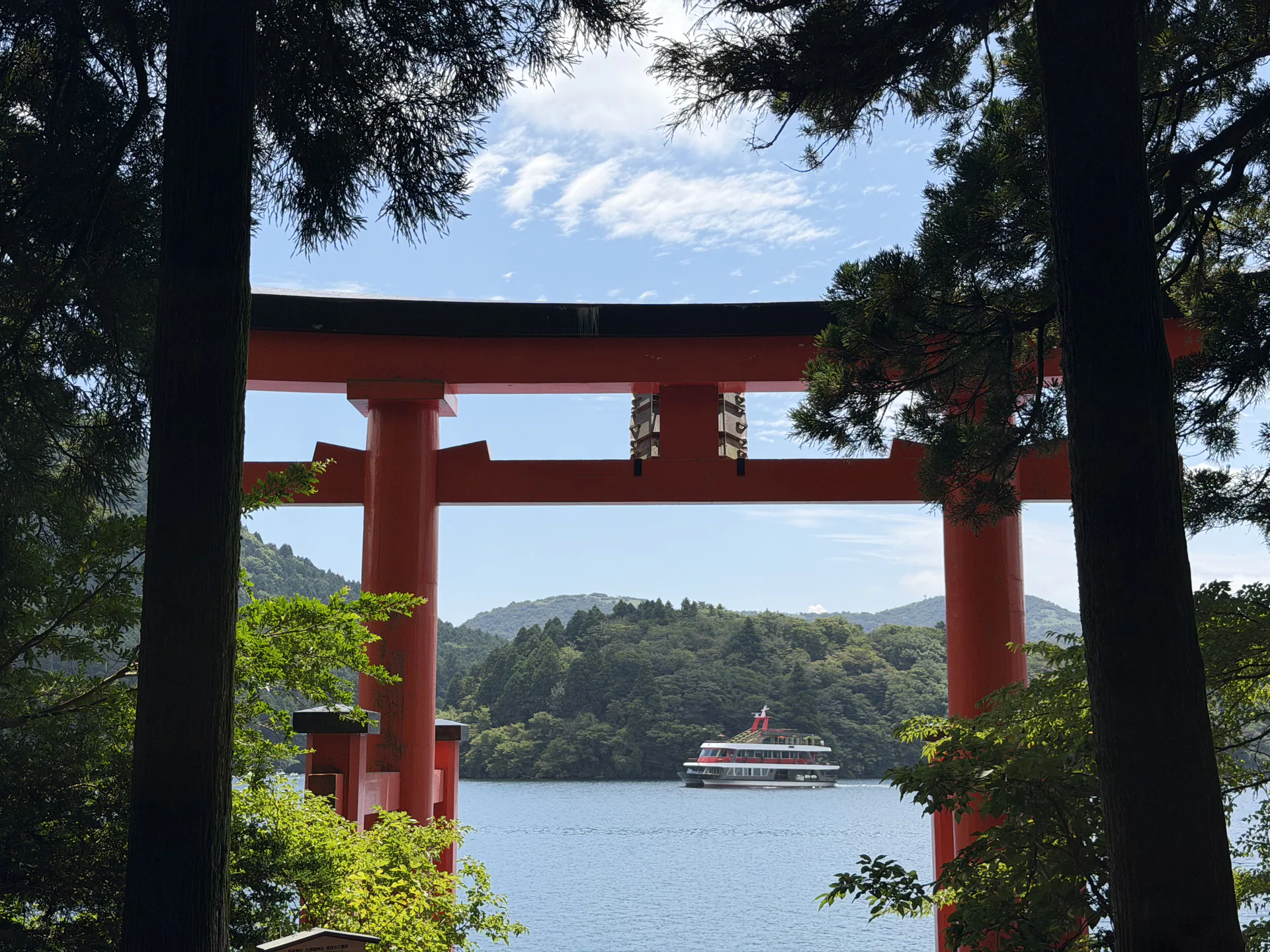
- Lake Ashi and the Hakone Shrine torii
- Tōnosawa and the Hayakawa valley
- The museums: Sengokuhara and Ninotaira
- Which area should you pick?
- Mistakes to avoid
Hakone is a volcanic mountain area east of Mount Fuji, about 1 hour 20 minutes from Tokyo by train, close enough for a day trip. People come for the Owakudani steam vents, the torii on Lake Ashi, the museums and hot-spring ryokans. I visited over three days in summer, with one night in Tōnosawa, and Mount Fuji never showed.
At a glance
- From Tokyo
- about 1 hr 20 minRomancecar to Hakone-Yumoto
- Ropeway
- ¥3,000round trip, all sections
- Mount Fuji in August
- not seenhidden during my visit
- Where to stay
- a ryokanGora to get around, the valley for quiet
 Hakone: Owakudani, Lake Ashi, Gora and where to stay
Map of the area, from Tōnosawa to Lake Ashi
Loading map…
- Tonosawa StationHakone Tozan mountain railway.
- Fukuzumiro ryokanI stayed here one night. Tōnosawa, in the Hayakawa valley.
- Gora Station541 mMountain railway and cable car to Sōunzan.
- Hakone Gora Park
- Hakone Open-Air Museum
- Sounzan Station750 mCable car and ropeway.
- Owakudani1 044 mSteam vents and black eggs, by ropeway.
- Pola Museum of ArtSengokuhara, in the forest.
- Kojiri portNorth end of Lake Ashi: rowboats and swan boats. The pirate ships leave from nearby Tōgendai.
- Kuzuryu Forest and toriiTorii in the lake. Paid entry, forest trail.
- Hakone Shrine and Torii of PeaceA line for the photo at the torii.
- Moto-HakonePirate ship pier, big torii, restaurants.
How is the area laid out?
Hakone isn’t a city but a town of valleys and craters. The sights form a loop, with the Hayakawa valley at the bottom, Gora in the middle, Owakudani at the top and Lake Ashi on the other side of the pass.
The classic loop takes four different kinds of transport. I drove a rental car, though, except for the cable car and the ropeway.
You can see Mount Fuji from the lakeshore and from the top of the valley on a clear day, but it stayed hidden the whole time I was there. In summer, don’t come to Hakone for Mount Fuji: come for Hakone.
Getting around: train, cable car, ropeway and pirate ship
From Tokyo, the Odakyu Romancecar runs from Shinjuku to Hakone-Yumoto in about 1 hour 20 minutes. You pay a ¥1,200 surcharge on top of the base fare.
From there the loop takes four rides, one after the other:
- The Hakone Tozan mountain railway, from Hakone-Yumoto to Gora by way of Tōnosawa and Miyanoshita.
- The cable car, from Gora to Sōunzan: ¥430 one way for adults.
- The Hakone Ropeway, from Sōunzan over Owakudani to Tōgendai on the lakeshore. There’s one fare for every section: ¥2,000 one way or ¥3,000 round trip. It runs 9 a.m. to 4:45 p.m. (5 p.m. at Owakudani).
- The pirate ship, from Tōgendai to Moto-Hakone: ¥1,700 one way.
The Hakone Free Pass covers those four rides, the local buses and the trip from Tokyo. It costs ¥7,100 for two days from Shinjuku. The details are on Odakyu’s travel site for Hakone visitors, on its Free Pass page.
I didn’t buy it since I had a car. For comparison, the cable car from Gora to Sōunzan, the ropeway round trip and the cable car back down to Kōen-shimo Station (for Gora Park) cost me ¥3,770 per person, without the trip from Tokyo or the boat.
Gora, the practical base
Gora is where everything connects: the mountain railway stops here and the cable car starts here. Around the log-built station there’s a short street of restaurants and cafés.
Early in the morning the street is empty and the cafés are only just opening. Gora Park, right above the station, costs ¥650 and has a fountain, a tropical greenhouse and glassmaking workshops.
What you give up: you can’t see the lake or Mount Fuji from Gora. It’s a place to sleep and eat, not a place for views.
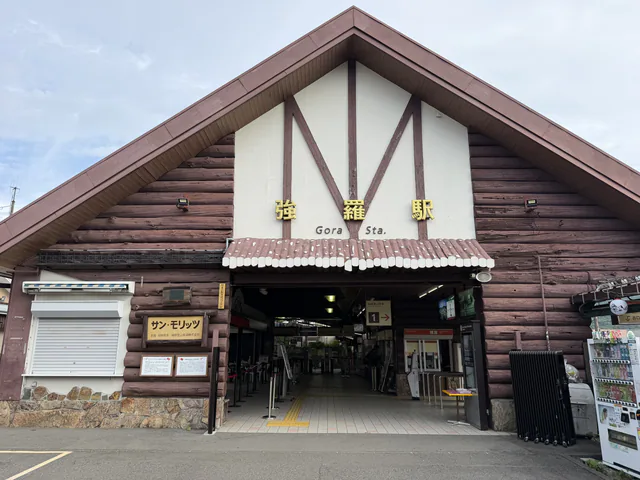 Read nextGora, a practical guideGora in Hakone: the station and the cable car to Sōunzan and Owakudani, Gora Park, and where to eat, with breakfast, craft beer and teppanyaki.
Owakudani, the steaming valley
It’s an active crater at 1,044 m that you reach by ropeway, over steam vents and yellow sulfur deposits. The volcanic alert was at level 1 (active volcano, normal access) at the last update.
The thing to eat here is black eggs boiled in the hot spring water: ¥500 for 4 eggs. The morning I went, clouds covered the top of the valley.
What you give up: the view when the clouds come down, which happens a lot in summer. If you drive, the parking lot closes at 4:40 p.m..
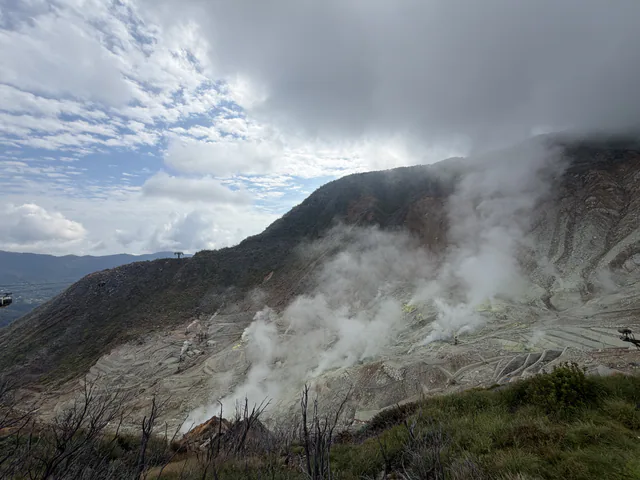 Read nextOwakudani, Hakone's steaming valleyOwakudani in Hakone: the ropeway from Sōunzan, the steam vents and the black eggs, with fares, opening hours and the parking lot.
Lake Ashi and the Hakone Shrine torii
The lake fills the old Hakone caldera. On its southeast shore the Hakone Shrine torii stands in the water, and it’s the photo everyone in the area comes for.
Around noon the line ran down the steps, and a sign limits each group to 3 minutes for photos. I didn’t wait in line: I took my pictures from the side, between two groups.
On the east shore, Kuzuryu Forest hides a second torii in the lake, but unlike the first one there’s no line. Entry to the forest costs ¥600.
What you give up: any quiet at the main torii in the middle of the day. The lake is also a long way from Gora, so you need the ropeway to Tōgendai or a car.
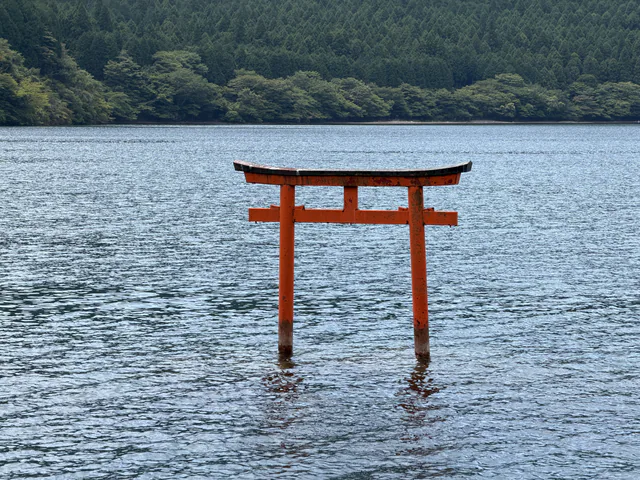 Read nextLake Ashi and its torii gatesLake Ashi in Hakone: the Hakone Shrine torii and its line, the hidden Kuzuryu torii, the pirate ships, Moto-Hakone and where to eat by the lake.
Tōnosawa and the Hayakawa valley
Down at the bottom, between Hakone-Yumoto and Miyanoshita, the Hayakawa River runs through a wooded gorge. Old ryokans line the water’s edge.
I stayed at the Fukuzumiro ryokan in Tōnosawa, a few minutes’ walk from the station. According to the history panel inside, the ryokan has been in this wooden building since around 1910.
You can book it on Booking.com: see the Fukuzumiro ryokan on Booking.com.
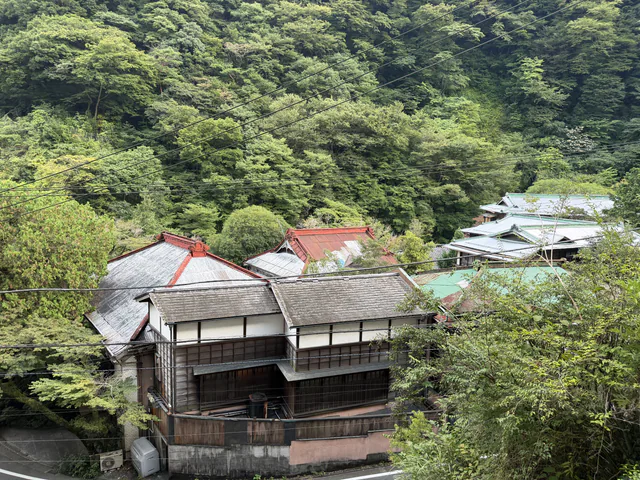 Read nextHakone ryokan: the FukuzumiroThe Fukuzumiro, a wooden ryokan in Tōnosawa, Hakone: the room, the round bath, the kaiseki dinner, the history of the building and the area around it.
What you give up: the view. You’re at the bottom of a valley, and you need the train or a car to get up to Gora and the lake.
The museums: Sengokuhara and Ninotaira
I went to two of the museums. The Pola Museum of Art in Sengokuhara shows Impressionist paintings in a glass building in the middle of the forest. The Open-Air Museum near Gora is the opposite, with sculptures set out on lawns.
The Pola Museum costs ¥2,200 and the Open-Air Museum ¥2,000.
What you give up: money, since the two museums together cost ¥4,200 per person.
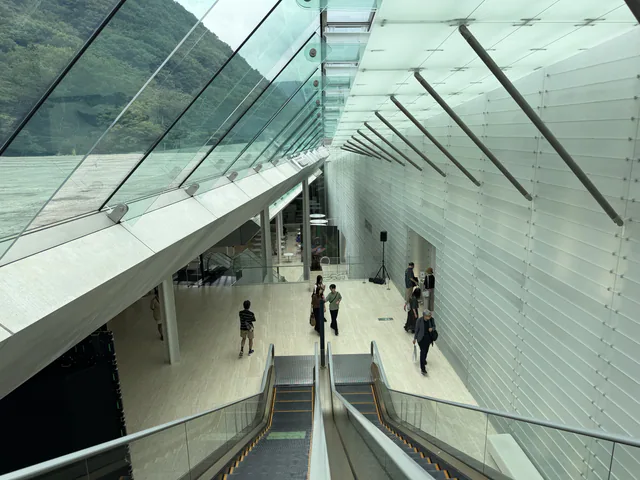 Read nextPola Museum of Art in SengokuharaPola Museum of Art in Hakone: Impressionist paintings in a glass building in the Sengokuhara forest. Ticket price, opening hours, how to get there, time needed.
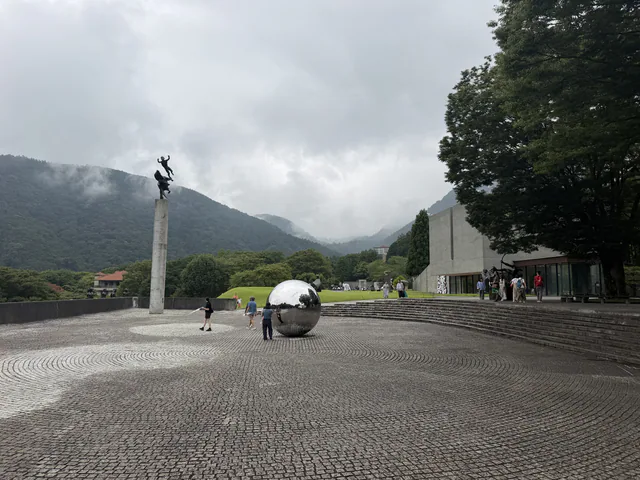 Read nextHakone Open-Air MuseumHakone Open-Air Museum (Chōkoku-no-Mori): ticket price, how to get there from Gora, how long the visit takes, and the Picasso Pavilion.
Which area should you pick?
| Area | What it’s for | Without a car | What you give up |
|---|---|---|---|
| Gora | sleeping, eating, the park | mountain railway | no lake, no Mount Fuji |
| Owakudani | steam vents, black eggs | cable car, then ropeway | clouds in summer |
| Lake Ashi | torii, boats, Kuzuryu | ropeway or bus | crowds at the torii around noon |
| Tōnosawa | riverside ryokans | mountain railway | no view |
| Museums | Pola, Open-Air | bus or train | ¥2,000 to ¥2,200 entry |
On a Hakone day trip, I’d start early at Gora, take the ropeway before 10 a.m. and get to the lake around noon. I saw those three areas in one day by car.
What I found
I spent one night in Tōnosawa. The next day I did Gora, Owakudani, Gora Park, the Pola Museum and the lake. I came back two days later for the Open-Air Museum and Gora.
Mount Fuji stayed hidden all three days. The volcanic valley was in the clouds in the morning, while the lake was in full sun at noon.
Before 10 a.m. Gora and the ropeway were quiet. The only real crowd of the day was at the Hakone Shrine torii.
Mistakes to avoid
- Coming to Hakone in summer to see Mount Fuji. I didn’t see it once.
- Getting to the Hakone Shrine torii at noon. That’s when the line forms, and photos are limited to 3 minutes.
- Driving up to Owakudani late in the afternoon. A poster gave the parking lot closing time as 4:40 p.m., and cars can’t leave after that.
- Leaving the ropeway for the end of the day. It runs 9 a.m. to 4:45 p.m. (5 p.m. at Owakudani) only.
FAQ
How do you get to Hakone from Tokyo?
The Odakyu Romancecar runs from Shinjuku to Hakone-Yumoto in about 1 hour 20 minutes. From there the Hakone Tozan mountain railway takes you up to Gora.
How much is the Hakone Ropeway?
There’s one fare for every section: ¥2,000 one way and ¥3,000 round trip for adults. I paid ¥3,000 for a round trip.
What does the Hakone Free Pass cover?
The trip from Shinjuku, the mountain railway, the cable car, the ropeway, the pirate ship and the local buses. Odakyu sells it for ¥7,100 for two days from Shinjuku.
Can you see Mount Fuji from Hakone?
Yes, from the lakeshore and from Owakudani on a clear day. During my visit in summer it stayed hidden.
Where should I stay in Hakone?
Gora if you want to get around easily, the Hayakawa valley for an old ryokan by the river. I stayed at the Fukuzumiro ryokan in Tōnosawa.